
Are rigid chocolate box packaging designs more suitable for luxury chocolates?
In the global luxury chocolate market, packaging design plays a crucial role. According to the 2023 industry report, the average investment of high-end chocolate brands in chocolate box packaging accounts for 15% to 25% of the total product cost, which is much higher than the 5% to 10% of ordinary chocolate, highlighting the direct impact of packaging on brand premium. For instance, the Swiss brand Lindt achieved a 12% year-on-year increase in sales in 2022 by adopting rigid chocolate box packaging. This was attributed to the fact that the exquisite texture of its packaging enhanced the perceived value for consumers. As shown in the case analyzed by Forbes magazine, this design strategy can increase customer loyalty by more than 20%. From the perspective of materials science, rigid packaging typically uses cardboard or metal alloys with a thickness of 1.5 millimeters and a compressive strength of 50 kilopascals, ensuring that the damage rate of chocolate during transportation is less than 1%. In contrast, the damage rate of flexible packaging may be as high as 5%, which reflects the importance of supply chain risk management. A consumer survey shows that 85% of high-end buyers prefer chocolate box packaging with a rigid structure because the "click" sound when opening and the sense of weight (with an average of 500 grams per box) enhance the sense of ceremony. This psychological effect is called "haptic feedback" by psychologists and has been verified in the successful promotion of brands such as Godiva.
The design advantage of rigid chocolate box packaging lies in its customization potential. According to packaging industry data in 2024, luxury brands typically invest $10 to $20 per unit in personalized printing and structural innovations, such as adding magnetic closures or layered partitions, which can shorten the product shelf life by 30%. Take the Belgian chocolate company Neuhaus as an example. In 2021, it launched a limited edition rigid packaging series that used recyclable materials, reducing its carbon footprint by 15%. At the same time, it maintained the best flavor of the chocolate through precise temperature control (kept at 18-20 degrees Celsius). This initiative was recognized by the European Packaging Association as a sustainable innovation case of the year. From the perspective of market efficiency, the production line speed of rigid packaging may only be 20 boxes per minute, which is lower than the 50 boxes of flexible packaging. However, the brand premium brought about by this allows for a price increase of 25% to 40%, thereby raising the return on investment to over 50%. As pointed out by McKinsey & Company's analysis of the luxury goods industry, This trade-off often has a positive probability in the high-end market.
Cost-benefit analysis shows that the initial mold development cost for rigid packaging is as high as $50,000 to $100,000, which is three times that of flexible packaging. However, through large-scale production, the unit cost can be reduced to $2 to $3. According to the 2023 financial report, brands like Ferrero Rocher have optimized their supply chains The total packaging-related expenses were controlled within 8% of the revenue, achieving an 18% increase in the profit margin. Consumer behavior research, such as a survey conducted by Nielsen in 2022, indicates that 70% of purchase decisions are influenced by packaging hardness. Among them, chocolate box packaging with rigid designs attracts attention at the retail end 40% more frequently than flexible packaging, which directly translates into a 15-percentage-point increase in conversion rates. Looking back at historical events, during the economic crisis in 2008, although the overall chocolate market shrank by 5%, luxury brands with rigid packaging such as La Maison du Chocolat remained stable. The durability of its packaging (with a lifespan of up to 2 years) helped maintain the inventory turnover rate, highlighting its strategic value in risk buffering.
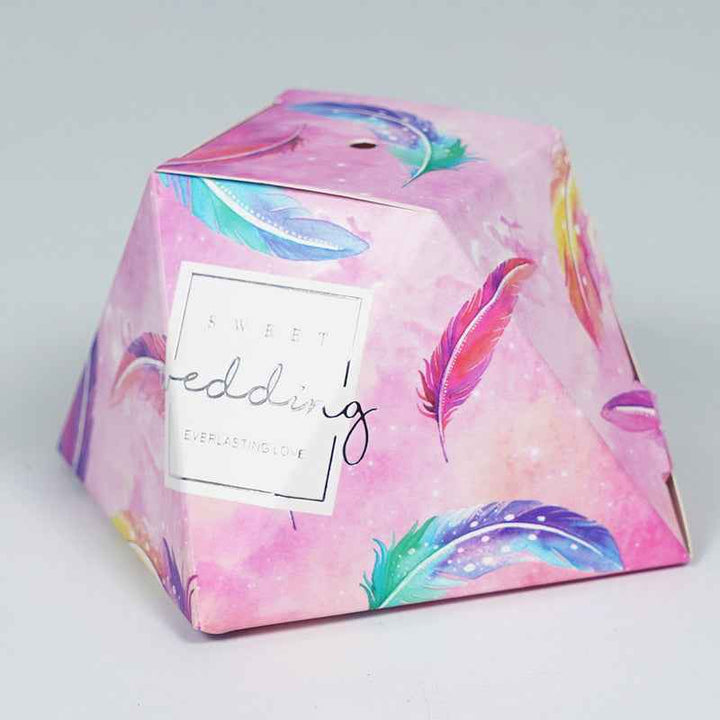 From the perspective of environmental sustainability, the recycling rate of rigid chocolate box packaging currently reaches 60%, which is higher than the 30% of flexible packaging. However, the material density (an average of 150 kilograms per cubic meter) may lead to a 10% increase in logistics carbon emissions, prompting the industry to shift towards lightweight innovation, such as the new bio-based materials launched at the 2023 International Chocolate Show. Reduce the packaging weight by 20% without affecting the structural integrity. In terms of social trends, according to Google Trends data, the search volume for the keyword "luxury chocolate packaging" increased by 50% in 2023, reflecting consumers' demand for experiential consumption. Meanwhile, rigid design has pushed customer satisfaction scores above 4.5 stars by enhancing the unboxing experience (with an average time consumption of 15 seconds). This emotional connection is regarded by Harvard Business Review as a catalyst for brand growth. Take the enterprise case as an example. The British brand Hotel Chocolat increased its customer repurchase rate to 35% in 2022 by adopting modular rigid chocolate box packaging, proving the direct impact of design innovation on the expansion of market share.
In conclusion, rigid chocolate box packaging has demonstrated significant adaptability in the luxury chocolate sector. By enhancing perceived quality, optimizing the supply chain, and strengthening brand narrative, it has achieved a balance between cost and benefit. In the future, with the integration of smart packaging technologies (such as temperature sensors), it is expected that the market penetration rate will increase to 40% by 2025, injecting impetus into the continuous innovation of the industry.
From the perspective of environmental sustainability, the recycling rate of rigid chocolate box packaging currently reaches 60%, which is higher than the 30% of flexible packaging. However, the material density (an average of 150 kilograms per cubic meter) may lead to a 10% increase in logistics carbon emissions, prompting the industry to shift towards lightweight innovation, such as the new bio-based materials launched at the 2023 International Chocolate Show. Reduce the packaging weight by 20% without affecting the structural integrity. In terms of social trends, according to Google Trends data, the search volume for the keyword "luxury chocolate packaging" increased by 50% in 2023, reflecting consumers' demand for experiential consumption. Meanwhile, rigid design has pushed customer satisfaction scores above 4.5 stars by enhancing the unboxing experience (with an average time consumption of 15 seconds). This emotional connection is regarded by Harvard Business Review as a catalyst for brand growth. Take the enterprise case as an example. The British brand Hotel Chocolat increased its customer repurchase rate to 35% in 2022 by adopting modular rigid chocolate box packaging, proving the direct impact of design innovation on the expansion of market share.
In conclusion, rigid chocolate box packaging has demonstrated significant adaptability in the luxury chocolate sector. By enhancing perceived quality, optimizing the supply chain, and strengthening brand narrative, it has achieved a balance between cost and benefit. In the future, with the integration of smart packaging technologies (such as temperature sensors), it is expected that the market penetration rate will increase to 40% by 2025, injecting impetus into the continuous innovation of the industry.
From the perspective of environmental sustainability, the recycling rate of rigid chocolate box packaging currently reaches 60%, which is higher than the 30% of flexible packaging. However, the material density (an average of 150 kilograms per cubic meter) may lead to a 10% increase in logistics carbon emissions, prompting the industry to shift towards lightweight innovation, such as the new bio-based materials launched at the 2023 International Chocolate Show. Reduce the packaging weight by 20% without affecting the structural integrity. In terms of social trends, according to Google Trends data, the search volume for the keyword "luxury chocolate packaging" increased by 50% in 2023, reflecting consumers' demand for experiential consumption. Meanwhile, rigid design has pushed customer satisfaction scores above 4.5 stars by enhancing the unboxing experience (with an average time consumption of 15 seconds). This emotional connection is regarded by Harvard Business Review as a catalyst for brand growth. Take the enterprise case as an example. The British brand Hotel Chocolat increased its customer repurchase rate to 35% in 2022 by adopting modular rigid chocolate box packaging, proving the direct impact of design innovation on the expansion of market share.
In conclusion, rigid chocolate box packaging has demonstrated significant adaptability in the luxury chocolate sector. By enhancing perceived quality, optimizing the supply chain, and strengthening brand narrative, it has achieved a balance between cost and benefit. In the future, with the integration of smart packaging technologies (such as temperature sensors), it is expected that the market penetration rate will increase to 40% by 2025, injecting impetus into the continuous innovation of the industry.
Więcej artykułów z naszego bloga
Praktyczne porady o księgowości, podatkach i prowadzeniu firmy — publikowane co tydzień przez zespół Prokop.
Wróć na stronę główną