
How does an industrial floor scrubber cost saving strategy reduce long-term expenses?
A sophisticated cost-saving strategy for industrial floor scrubber is by no means a simple comparison of purchase prices. Instead, it is a systematic project aimed at optimizing the total cost of ownership throughout the entire life cycle. The core lies in reshaping the equipment from a "cost item" to an "efficiency asset". The most significant savings come directly from the leap in human productivity. A large driving floor scrubber can clean an area of over 5,000 square meters per hour, with an efficiency equivalent to that of 8 to 10 workers. Take a 200,000-square-meter logistics center as an example. By adopting an automated cleaning solution, the size of the cleaning team can be reduced from 15 to 4 people, with an annual direct labor cost savings of 40% to 60%, often amounting to more than 100,000 US dollars. This is not merely a numbers game; it is about redeploying valuable human resources to higher-value tasks to achieve strategic optimization of the operational structure.
In-depth industrial floor scrubber cost saving is reflected in the precise control of water, chemical and energy consumption. The wastewater recovery rate of modern high-efficiency equipment is as high as over 97%, which means that only about 0.5 liters of clean water are needed to clean each square meter of ground, saving more than 70% of water compared to traditional methods. Through the intelligent metering pump, the concentration of the cleaning agent can be precisely controlled within the optimal active range of 0.3% to 0.8%, avoiding waste and is expected to reduce chemical consumption by 30%. In terms of energy, devices equipped with lithium-ion battery systems have a charging efficiency of over 90% and feature fast charging capabilities. Combined with intelligent power management, they can reduce overall energy consumption by approximately 25%. The audit report of an international supermarket chain shows that by upgrading water-saving and energy-saving equipment, the annual water, electricity and consumables costs of a single store have been reduced by approximately 18,000 US dollars, verifying the huge potential of refined operation.
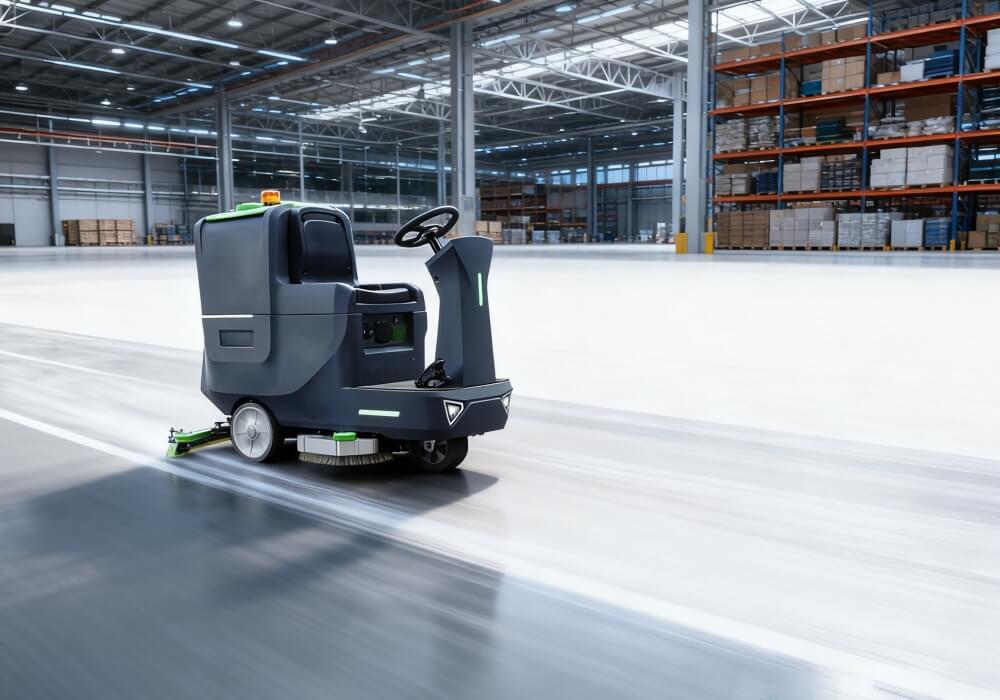 The scientific maintenance strategy is a firewall against unexpected expenses and locks in long-term benefits, which is often underestimated in the industrial floor scrubber cost-saving program. According to statistics, implementing a strict preventive maintenance plan can reduce the sudden failure rate of equipment by over 70% and extend the lifespan of key components by 30%. For instance, regularly inspecting and replacing worn brush discs and water-absorbing rubber strips (typically every 150 to 300 hours) can maintain the cleaning effect at its peak, avoid secondary work, and the cost of each proactive maintenance is only 20% of that of emergency repairs. The world's leading aircraft manufacturer has increased the mean time between failures of floor scrubbers by 50% in its factories through standardized maintenance procedures and the use of original parts, reducing the total maintenance cost during the equipment's depreciation period by approximately 35%.
Ultimately, the industrial floor scrubber cost-saving strategy integrating data intelligence takes savings to a new level. The Internet of Things (iot) technology enables real-time monitoring of the working status, energy consumption curves and component health of each device. Data analysis can optimize cleaning paths, reduce ineffective movements by 15%, and enable predictive maintenance, cutting unplanned downtime by 50%. From a financial perspective, an intelligent fleet management system with an initial investment of 150,000 US dollars can typically achieve a return on investment within 18 to 24 months by increasing the comprehensive utilization rate of equipment by 20%, reducing spare parts inventory by 15%, and cutting management supervision time by 25%. Therefore, true cost savings are a dynamic, data-driven continuous improvement process that ensures every investment is transformed into quantifiable operational advantages and financial benefits.
The scientific maintenance strategy is a firewall against unexpected expenses and locks in long-term benefits, which is often underestimated in the industrial floor scrubber cost-saving program. According to statistics, implementing a strict preventive maintenance plan can reduce the sudden failure rate of equipment by over 70% and extend the lifespan of key components by 30%. For instance, regularly inspecting and replacing worn brush discs and water-absorbing rubber strips (typically every 150 to 300 hours) can maintain the cleaning effect at its peak, avoid secondary work, and the cost of each proactive maintenance is only 20% of that of emergency repairs. The world's leading aircraft manufacturer has increased the mean time between failures of floor scrubbers by 50% in its factories through standardized maintenance procedures and the use of original parts, reducing the total maintenance cost during the equipment's depreciation period by approximately 35%.
Ultimately, the industrial floor scrubber cost-saving strategy integrating data intelligence takes savings to a new level. The Internet of Things (iot) technology enables real-time monitoring of the working status, energy consumption curves and component health of each device. Data analysis can optimize cleaning paths, reduce ineffective movements by 15%, and enable predictive maintenance, cutting unplanned downtime by 50%. From a financial perspective, an intelligent fleet management system with an initial investment of 150,000 US dollars can typically achieve a return on investment within 18 to 24 months by increasing the comprehensive utilization rate of equipment by 20%, reducing spare parts inventory by 15%, and cutting management supervision time by 25%. Therefore, true cost savings are a dynamic, data-driven continuous improvement process that ensures every investment is transformed into quantifiable operational advantages and financial benefits.
The scientific maintenance strategy is a firewall against unexpected expenses and locks in long-term benefits, which is often underestimated in the industrial floor scrubber cost-saving program. According to statistics, implementing a strict preventive maintenance plan can reduce the sudden failure rate of equipment by over 70% and extend the lifespan of key components by 30%. For instance, regularly inspecting and replacing worn brush discs and water-absorbing rubber strips (typically every 150 to 300 hours) can maintain the cleaning effect at its peak, avoid secondary work, and the cost of each proactive maintenance is only 20% of that of emergency repairs. The world's leading aircraft manufacturer has increased the mean time between failures of floor scrubbers by 50% in its factories through standardized maintenance procedures and the use of original parts, reducing the total maintenance cost during the equipment's depreciation period by approximately 35%.
Ultimately, the industrial floor scrubber cost-saving strategy integrating data intelligence takes savings to a new level. The Internet of Things (iot) technology enables real-time monitoring of the working status, energy consumption curves and component health of each device. Data analysis can optimize cleaning paths, reduce ineffective movements by 15%, and enable predictive maintenance, cutting unplanned downtime by 50%. From a financial perspective, an intelligent fleet management system with an initial investment of 150,000 US dollars can typically achieve a return on investment within 18 to 24 months by increasing the comprehensive utilization rate of equipment by 20%, reducing spare parts inventory by 15%, and cutting management supervision time by 25%. Therefore, true cost savings are a dynamic, data-driven continuous improvement process that ensures every investment is transformed into quantifiable operational advantages and financial benefits.
Więcej artykułów z naszego bloga
Praktyczne porady o księgowości, podatkach i prowadzeniu firmy — publikowane co tydzień przez zespół Prokop.
Wróć na stronę główną